Electric vehicles are no longer a niche topic. They are becoming a major driver of industrial investment, supply chain reconfiguration, and infrastructure development. Globally, electric car sales reached close to 14 million in 2023, representing about 18% of all cars sold. (IEA)
For Indonesia, this shift matters not only for mobility, but for where factories locate, how parts move, and what kinds of suppliers and logistics services become strategically valuable.
EV meaning, explained simply

EV stands for Electric Vehicle. At its simplest, an EV uses an electric motor for motion and draws energy from electricity stored in a battery. Instead of refueling with gasoline, you recharge the battery through a charging source.
You may also see these common categories:
- BEV (Battery Electric Vehicle): fully electric, no gasoline engine.
- PHEV (Plug-in Hybrid Electric Vehicle): combines an internal combustion engine and an electric motor, and the battery can be charged by plugging in. (afdc.energy.gov)
- HEV (Hybrid Electric Vehicle): combines a fuel engine and electric support, typically without plug-in charging.
In everyday conversation, “EV” usually refers to BEV, the fully electric type.
Why EVs are growing so fast
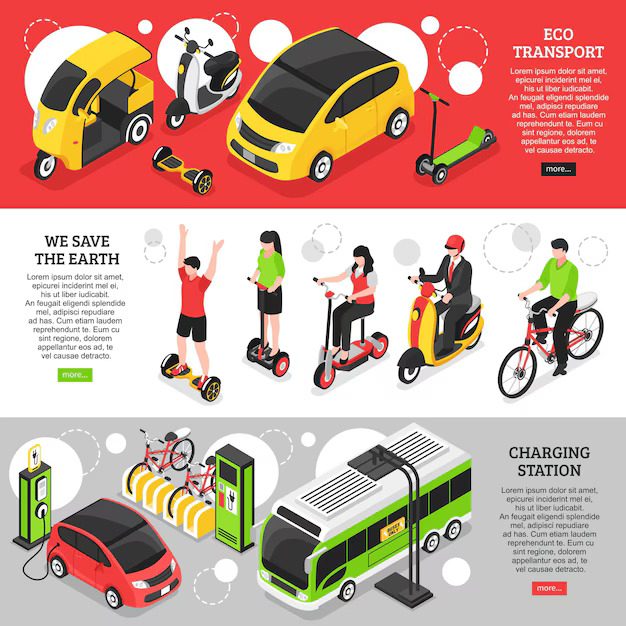
EV growth is not driven by a single trend. It is the result of multiple forces reinforcing each other: technology improvements, expanding charging ecosystems, shifting consumer expectations, and policy frameworks that encourage electrification.
At the global level, the scale of adoption is already substantial. The IEA reports that 2023 was a record year, with strong year-on-year sales growth and EV adoption moving beyond early adopters into broader markets. (IEA)
In Indonesia, government direction also plays a meaningful role. Presidential Regulation No. 55/2019 explicitly targets EV ecosystem development, including industry readiness and charging infrastructure support. (climate-laws.org)
In addition, Indonesia has implemented fiscal instruments such as VAT incentives and related tax measures designed to accelerate EV ecosystem growth. (Pajak)
The key point for industrial readers: EVs are not only a consumer product story. They shape factory demand, component ecosystems, and logistics requirements.
EVs create an entire supply chain, not just cars

A conventional automotive supply chain is complex, but EVs shift the “value center” toward batteries, power electronics, software, and charging-related components. This shift directly changes which industries expand fastest.
One indicator is battery demand. The IEA notes EV battery demand reached more than 750 GWh in 2023, rising sharply versus the previous year, driven primarily by electric cars. (IEA)
This demand pulls investment into upstream and midstream activities such as refining, cell production, pack assembly, thermal management, and recycling.
A simplified EV supply chain often includes:
- Battery materials and processing
- Battery cells and battery packs
- Power electronics and semiconductors
- Vehicle assembly and component suppliers
- Logistics, warehousing, distribution, and export
For Indonesia, the upstream dimension is especially strategic. Reuters has highlighted Indonesia’s ambition to leverage its nickel position to become a regional EV hub, tying minerals to downstream manufacturing strategy. (Reuters)
Why logistics matters more than ever for EV industries

EV-related components can be high value, schedule-sensitive, and sometimes handling-sensitive. When production scales quickly, delays that were previously tolerable become expensive because they disrupt line stability and supplier sequencing.
That is why EV-linked industrial projects typically prioritize:
- Predictable inbound logistics for materials and components
- Strong road connectivity for day-to-day movement
- Reliable access to ports for import and export flows
- Efficient warehousing and distribution options
This is not theory-only. Indonesia’s own auto and EV momentum has been increasingly linked with trade flows and infrastructure readiness, with industry observers repeatedly emphasizing how infrastructure and policy continuity affect sustained adoption. (GAIKINDO)
The link to Patimban Industrial Estate

As Indonesia’s industrial landscape evolves, EV supply chains are one of the clearest manufacturing opportunities, spanning electronics, components, packaging, warehousing, and export logistics. However, the success of EV-related operations depends on practical considerations: infrastructure, partner proximity, and the ability to move goods without friction.
This is where Patimban Industrial Estate becomes highly relevant.
Patimban Port is positioned as a modern logistics node supporting export industries, including an automotive terminal capability that is often cited in planning discussions around national logistics strengthening. (patimbanindustrialestate.co.id)
For EV and EV-adjacent businesses, that kind of connectivity can support three operational advantages:
- Export-ready scaling: EV components and electronics are frequently part of regional supply networks, so smoother export routes strengthen long-term planning. (patimbanindustrialestate.co.id)
- Supplier ecosystem formation: EV growth creates demand for vendors, MRO services, packaging, and logistics partners. Clustering makes collaboration faster and more cost-effective. (IEA)
- More predictable movement of goods: proximity to key logistics infrastructure can improve schedule reliability, which matters when production is tightly sequenced.
Bottom line
EVs are reshaping the automotive world, but the larger story is industrial: battery demand, electronics expansion, and logistics modernization are scaling alongside EV adoption. (IEA)
For businesses tracking the next wave of manufacturing growth in Indonesia, EV-linked supply chains are worth following closely.And for companies that value connectivity, export orientation, and operational readiness, Patimban Industrial Estate is positioned as an ideal industrial estate to support EV-related industries and the broader manufacturing ecosystem. (patimbanindustrialestate.co.id)